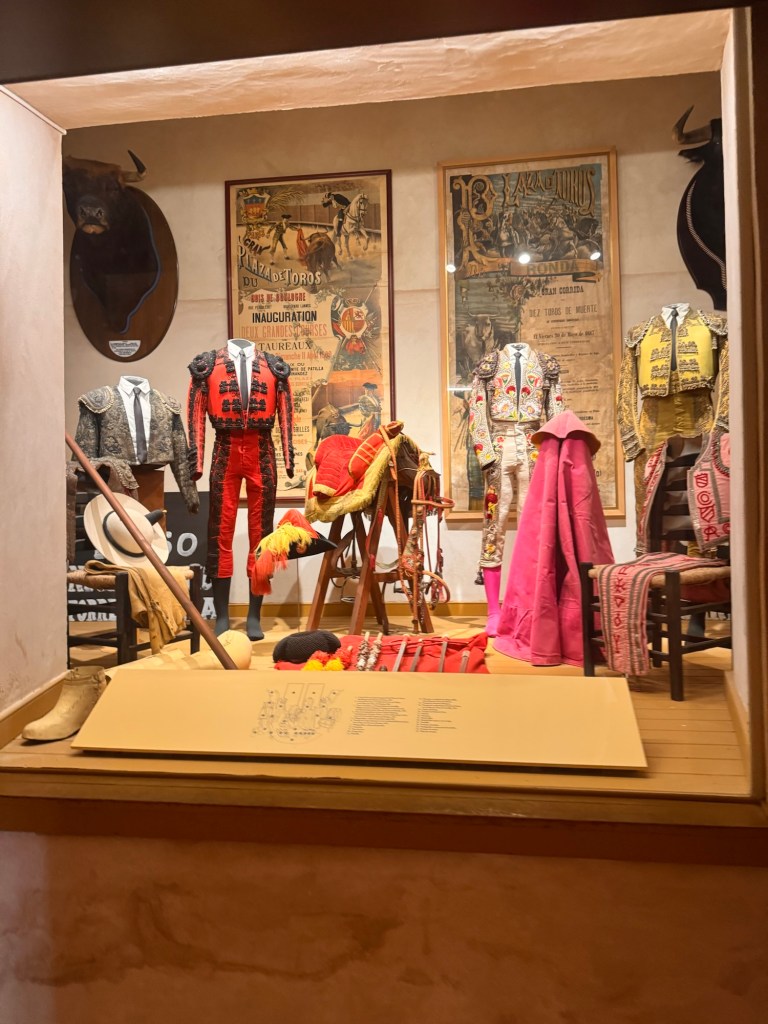
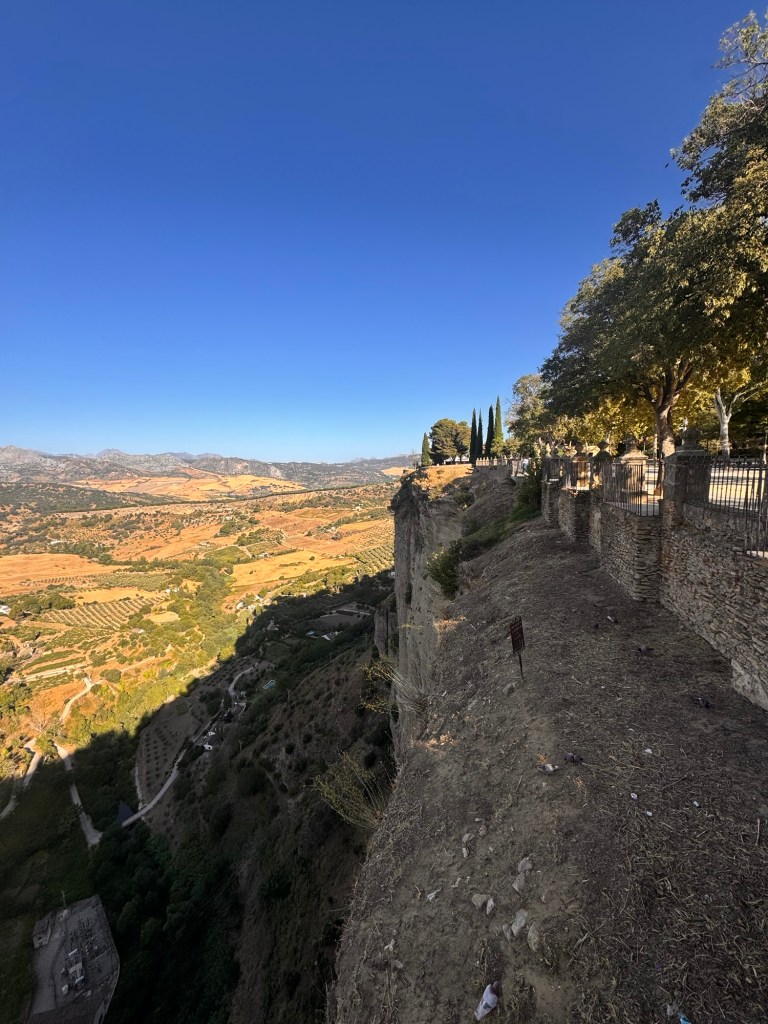
Ronda is a town that wears history on its sleeve. Perched dramatically above the Tajo gorge, it’s a place where poets, painters, and travelers have long found inspiration. Among its many claims to fame, none is more iconic—or controversial—than bullfighting. And in Ronda, this tradition has a particularly special stage: the Plaza de Toros, one of the oldest and most beautiful bullrings in Spain.
A Ring with a Story
The Plaza de Toros, completed in 1785 by the Real Maestranza de Caballería, isn’t just a bullring—it’s a symbol of Ronda’s identity. With its elegant stone arches, sand-colored arena, and a museum that tells the tale of matadors past, the bullring has become a cultural landmark as much as a sporting one. Ernest Hemingway and Orson Welles both fell in love with it, and the legendary Romero family of Ronda helped define modern bullfighting right here.
For decades, the highlight of the Ronda calendar was the Corrida Goyesca, held each September during the Feria de Pedro Romero. This was no ordinary bullfight: matadors dressed in elaborate 18th-century costumes inspired by Goya’s paintings, creating a spectacle that blended history, art, and ritual.
Why the Silence Now?
In recent years, the sounds of trumpets and the roar of the crowd have fallen silent. The reason isn’t a cultural shift but a practical one: structural issues in the bullring. Safety concerns over its arches and stonework led to the cancellation of the Goyesca and all related bullfighting events.
In 2024 and 2025, the ring’s iconic gates remained closed to bullfighting. For many in Ronda, it was a painful pause in a centuries-old tradition. For others, it opened space for reflection on whether bullfighting should remain part of the town’s future.
What’s Next for Ronda’s Bullfighting?
Restoration works are already in motion, and if all goes to plan, the Plaza de Toros could once again host bullfighting events as early as 2026. Whether the Goyesca returns exactly as before or evolves into something new remains to be seen.
In the meantime, the bullring itself is very much alive. Visitors can walk its sandy arena, explore its museum, and imagine the drama that once unfolded under its arches. Even without the spectacle of bullfighting, the site remains a powerful connection to Ronda’s past.
Tradition Meets Tomorrow
Ronda’s story with bullfighting is not over—it’s simply in a pause. Whether you view it as a treasured tradition, a cultural curiosity, or a practice best left to history, the Plaza de Toros remains a must-see when visiting the town.
And when the trumpets do sound again, they’ll carry not only the weight of history but also the question of what role bullfighting should play in modern Spain.
👉 If you’d like to experience it for yourself, you can book a day trip to Ronda here. The tour gives you free time to wander the town at your own pace—including a visit to the bullring if you wish.

 Torremolinos Life